MARVEL Puzzle Quest: Match RPG
- 3.8
- Rating
- 10.00M
- Installs
- Free
- Price

 Analysis by App-foxy
I spent time with MARVEL Puzzle Quest: Match RPG as a role-playing game built around match-three battles, and its central idea is easy to understand: make matches on a puzzle board, use the resulting power to deploy Marvel heroes, and build a team that can handle increasingly demanding encounters. It is free to start, but it is not a small one-session puzzle toy. The real appeal is the long-term process of collecting characters, learning their abilities, and deciding which combinations deserve your limited attention.
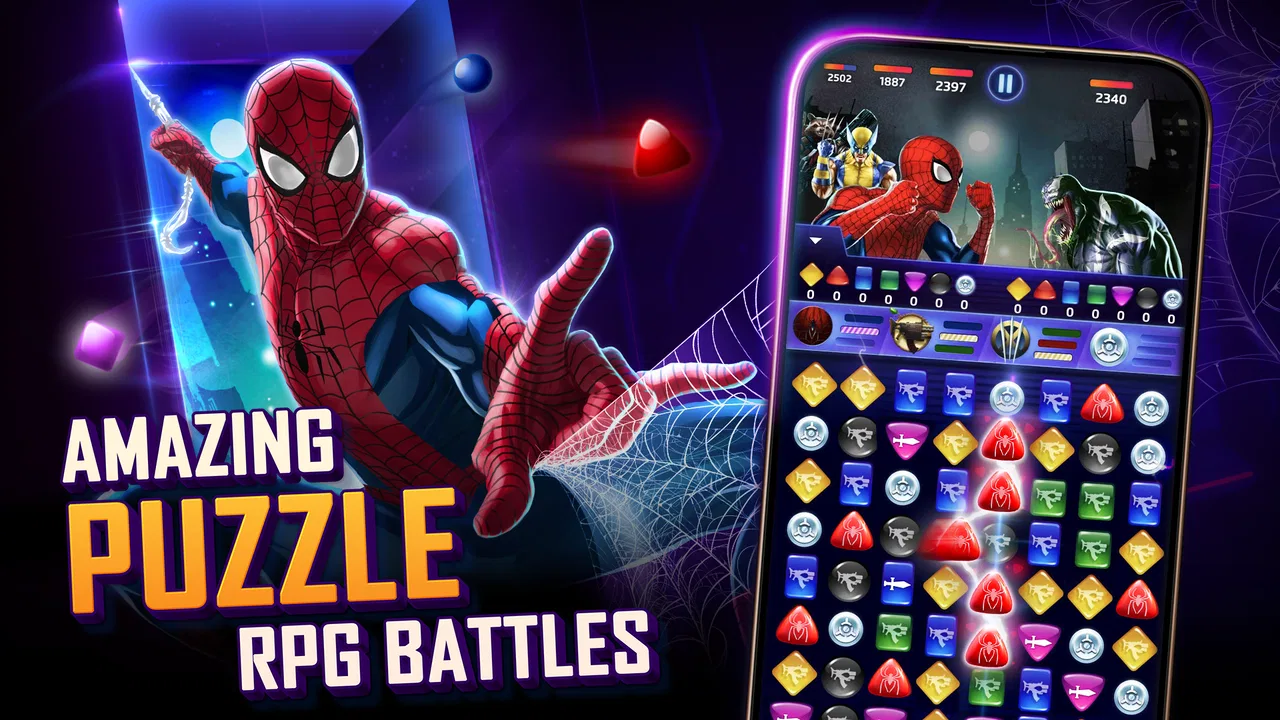
That combination gives it a different feel from a standard match-three game. The board still asks me to spot useful patterns quickly, yet every move also connects to a larger battle plan. A match can create immediate damage, charge a power, remove a dangerous tile, or set up a better turn later. I found that the most satisfying moments came when the puzzle and the hero roster worked together rather than when I simply made the largest available match.
How the free model affects the experience
The game is free to download and play, which makes trying its basic loop straightforward. The developer is 505 Go Inc., and the title has been available since August 21, 2013. Its long presence on mobile is reflected in a large player base: it has passed 10 million installs, with an average rating of 3.8 from roughly 369 thousand ratings.
You May Also Like

 Pandora - Music & Podcasts
Pandora’s Music Is Easy to Start, but Harder to Recover
Pandora’s strength is its low-effort path from a seed to a station. Its weak spot is how much confidence it asks you to place in connection, setup, and quiet recovery.

 8 Ball Pool
 Is Built on Rivalries, Rematches, and Routine
A close look at the rivalries, rematches, shared routines, and unanswered safety questions that turn a quick pool match into a persistent mobile community.

 Samsung Music
’s Quiet Strength Is Playing What You Already Own
Its reach comes less from spectacle than from dependable access to a personal library. That simplicity is both the app’s strongest retention engine and its ceiling.

 AccuWeather: Weather Radar
AccuWeather Review: A Quick, Clear Forecast for Everyday Decisions
For everyday plans, the best forecast is the one you can understand quickly. AccuWeather makes rain timing, radar, and local conditions easy to act on, with a few trade-offs.

 Hill Climb Racing
Why Hill Climb Racing Still Turns Crashes Into One More Run
A tiny car, a bumpy hill and one more upgrade: Hill Climb Racing keeps resurfacing because its simple chaos makes every near-miss feel personal.

 AliExpress - Shopping App
AliExpress Makes Global Shopping Feel Personal, but Shoppers Bear the Risk
AliExpress turns a global marketplace into a pocket-sized discovery engine. Its reach is useful, its shopping loop compelling, and its trade-offs easy to miss.
More From Our News Desk
View All News


Those figures tell me that this is an established game rather than a brief promotional experiment, but they do not turn the free entry into unlimited value for every player. The important distinction is that the download costs nothing while optional purchases range from $0.99 to $99.99 per item. I can begin without paying, learn the systems, and decide later whether spending improves my experience. That is a more useful way to judge the price than treating the game as either completely free or automatically expensive.
For a player who only wants occasional Marvel-themed puzzle battles, the free access is enough to test whether the structure feels enjoyable. For someone who wants to collect broadly, progress quickly, or keep up with every part of the roster, the purchase options become much more relevant. I would not describe the game as a one-time paid product with a clearly defined finish. It is better understood as a free entry point into an ongoing collection-focused RPG, so the value depends heavily on how much time and restraint a player brings to it.
The age guidance is Everyone 10+, which fits the comic-book combat and accessible puzzle presentation. The current version is 346.2, and the minimum operating-system requirement is 7.1. That makes it approachable for people using older compatible devices, although actual comfort will still depend on the phone or tablet’s condition and available space. I would check the device before committing to long sessions, especially if the game is intended for a younger player or a shared family device.
The puzzle board is more strategic than it first appears
At first glance, the match-three layer can look familiar. Tiles are moved to create lines, and the board produces resources that feed the team. The difference is that the best move is not always the largest immediate match. I often had to consider whether clearing one color would charge a useful ability, whether a special tile would survive long enough to matter, and whether a flashy move would leave the opponent with an easy counterattack.
My most practical tip is to stop scanning only for matches at the top of the board. Before moving, I look for opportunities near the bottom because those can trigger more useful cascades. I also check whether a move will destroy a tile I may need for a character ability. That small pause makes the game feel less random and helps separate deliberate play from simply swiping the first obvious combination.
Another useful habit is to think in terms of the next two turns. A match that charges a power now may be weaker than a move that creates a favorable board and lets the ability arrive at the right moment. This becomes especially important when an enemy is close to acting or when a character’s skill is better used after a particular color has accumulated. The game rewards planning, but it does not demand the concentration of a pure competitive puzzle title.
Team building gives the matches their long-term purpose
The role-playing layer is where the product earns its name. Heroes are not merely visual skins placed over the same puzzle mechanics. Their abilities affect how I value colors, board positions, timing, and target selection. A team that looks powerful on paper may feel awkward if its skills fight over the same resources, while a less obvious group can work well when its powers cover different needs.
I recommend testing a team for several battles instead of replacing it after one disappointing match. Some combinations are slow to start but become dependable once their powers are charged. Others are excellent at quick damage but leave me exposed when the board does not provide the colors I want. This is one of the game’s less obvious trade-offs: a roster with many characters creates choice, but it also creates more opportunities to invest in a lineup that does not suit your preferred style.
When I build a team, I first choose a character whose ability defines the plan, then add one hero who helps create or protect that plan, and finally use the remaining slot to cover a weakness. That is more reliable than choosing only the three characters I like most from the comics. A favorite hero can still be included, but the board usually decides whether personal preference or team efficiency wins the argument.
The Marvel setting helps the collection process because the characters provide an immediate reason to experiment. Fans will recognize the appeal of seeing Spider-Man, Captain America, Iron Man, and other heroes represented in a puzzle-RPG format. Still, the game is not only for people who know every comic storyline. I could enjoy the systems without deep Marvel knowledge, while familiarity makes unlocking and trying different characters more personally rewarding.
What a normal play session feels like
A realistic everyday use case is a short break during a commute, lunch period, or evening wind-down. I can play a few battles, make progress, and stop without needing to treat the game like a full console session. That convenience is one of its strongest advantages. The turn-based puzzle structure is easier to pause mentally than a real-time action game, and each encounter gives me a clear reason to keep going.
There is also a second kind of session: the more focused roster session. Instead of rushing through battles, I review which heroes complement one another, try a different team, and pay attention to why a match succeeded or failed. This is where the RPG side becomes more engaging. The game can support casual play, but it offers more value to people who enjoy gradually improving a collection and refining decisions.
The trade-off is that a game designed for repeated mobile sessions can become part of a routine rather than a self-contained experience. If I only want a puzzle game that I can finish and put away, this structure may feel too open-ended. If I enjoy returning to a familiar roster, testing combinations, and making small improvements, the ongoing format is much easier to appreciate.
Where the free experience can feel less comfortable
The biggest friction is not the match-three combat itself; it is the relationship between collection goals and optional spending. Because purchases can reach $99.99 per item, I would approach the store carefully and decide on a personal limit before buying anything. The existence of a high-priced option does not mean every player must spend that amount, but it does mean the game should not be treated like a completely cost-free hobby once collection ambitions become serious.
I also would not buy immediately just because a new character looks exciting. The better question is whether that character solves a problem in the team I actually use. A purchase can feel valuable when it supports a clear strategy, yet disappointing when it simply adds another option to a roster I already struggle to manage. Waiting until I understand my preferred colors and battle habits makes the free trial much more informative.
Another limitation is the amount of attention the roster can demand. More heroes mean more possibilities, but they also mean more decisions about development, team roles, and which characters deserve time. Players who dislike comparing abilities or revisiting their lineup may find the RPG layer more like homework than entertainment. In that situation, a simpler match-three game is probably a better choice even if it lacks the Marvel theme.
The rating of 3.8 suggests a generally positive but not universally smooth reception. I see that as a reasonable warning to keep expectations balanced. The game has enough depth to attract dedicated players, but its free-to-start structure, collection focus, and long-term progression will not suit everyone. I would judge it after several sessions rather than after the opening battles alone.
Who will get the most value from it?
I think the strongest audience is someone who wants three things at once: recognizable Marvel heroes, puzzle battles that reward planning, and a roster that can be revisited over time. The game is particularly suitable for players who enjoy experimenting with teams instead of using one permanent lineup. It also works for people who prefer turn-based decisions to fast reflexes, since the important choices happen through board evaluation and ability timing.
Marvel fans who usually find traditional role-playing games too demanding may find this format approachable. The match board gives each battle an immediate, understandable action, while the hero abilities add a layer of identity and planning. On the other hand, a puzzle expert looking for highly pure, score-driven competition may find the RPG systems distracting. The goal is not simply to solve the board as efficiently as possible; it is to solve it in a way that supports the team.
I would recommend trying it free before spending if you are uncertain about the collection model. Give yourself enough time to see whether you enjoy the decisions after the novelty of the characters fades. If the thought of improving a roster feels motivating, the free version can provide meaningful value. If you already know that optional purchases, repeated battles, or long-term character management frustrate you, paying for items is unlikely to fix the underlying mismatch.
It is also worth considering your preferred alternative. A conventional match-three game is better if you want quick, uncomplicated rounds with no hero-building layer. A deeper traditional RPG is better if you want exploration, equipment systems, and a story-led adventure rather than board-based combat. This game sits between those choices: it is more strategic and persistent than a basic puzzle title, but more compact and repeatable than a full-scale role-playing adventure.
My verdict after weighing the value
I see MARVEL Puzzle Quest as a good free trial with a surprisingly thoughtful battle core. Its value comes from the interaction between board choices and hero abilities, not merely from placing Marvel characters into a familiar puzzle format. The most rewarding approach is to play patiently, study which colors and powers work together, and treat new characters as strategic tools rather than automatic upgrades.
The free entry is a genuine advantage because it lets me test the game before making a financial commitment. At the same time, the optional purchase range means I would keep spending controlled and avoid assuming that collecting everything is necessary for enjoyment. The game delivers its best value when I am happy to progress at my own pace and use the roster I have thoughtfully, rather than chasing every possible addition.
My recommendation is to try it if you want a Marvel-themed match-three RPG with team-building depth, but skip it if you want a finished, purely casual puzzle game. I would especially recommend it to a friend who enjoys planning a few moves ahead and returning to improve a favorite lineup. For that player, the free version offers a fair chance to discover whether the long-term loop is compelling. For everyone else, the same free access makes the decision simple: play first, spend only if the strategy and collection side genuinely earn your interest.
FAQs for MARVEL Puzzle Quest: Match RPG
01What is MARVEL Puzzle Quest: Match RPG?
MARVEL Puzzle Quest: Match RPG is a superhero-themed mobile game that combines match-3 puzzle battles with role-playing and team-building mechanics. You collect Marvel characters, create a squad, and use matching tiles to charge abilities during combat. The game includes heroes and villains from different Marvel stories, making it appealing to both puzzle fans and players who enjoy character progression.
02How does the gameplay work in MARVEL Puzzle Quest?
Battles are based on matching three or more tiles of the same color to generate power and attack opponents. Each character has unique abilities that can be activated after collecting the required colors. You must decide whether to focus on damage, healing, defense, or special effects, while also watching the enemy board. Good team combinations and smart tile choices are often more important than simply making the fastest match.
03Can I play MARVEL Puzzle Quest offline?
MARVEL Puzzle Quest is primarily designed as an online game, so a stable internet connection is generally required for many of its features. Online access supports events, missions, account synchronization, updates, purchases, and other live content. Because of this, it is not the best choice if you want a fully offline puzzle experience. Availability of certain modes may change with updates.
04Is MARVEL Puzzle Quest free to download and play?
The game is free to download, but it includes optional in-app purchases. Players can progress without paying by completing missions, participating in events, and managing resources carefully, although collecting and upgrading characters may take time. Purchases can provide additional resources or speed up progress. Parents should review device purchase settings, especially because the game’s ongoing events and collectible characters may encourage continued spending.
05Does MARVEL Puzzle Quest include multiplayer or competitive features?
Yes, MARVEL Puzzle Quest offers features connected to other players and live competition, although the exact modes can vary over time. You may encounter events, leaderboards, alliances, and battles where team strength and strategy affect your results. These systems add long-term replay value and provide reasons to keep improving your roster. However, progress can feel slower for players who do not regularly participate or invest resources.
Pros
- Large roster of Marvel heroes and villains to collect and upgrade.
- Match-3 combat is easy to learn but offers meaningful tactical choices.
- Frequent events and challenges provide fresh objectives for regular players.
- Team-building options let you combine characters with complementary abilities.
- Playable without spending money
- with steady rewards for active users.
Cons
- Energy limits can interrupt longer play sessions.
- Upgrading a large roster requires considerable time and resources.
- Competitive modes may feel difficult without well-developed characters.
- New characters and content can make progression feel overwhelming.
- Some rewards and conveniences are tied to optional in-app purchases.

MARVEL Puzzle Quest: Match RPG
Gallery